

Vicus Caprarius: The Hidden City of Water Beneath the Trevi Fountain
Back
Vicus Caprarius: The Hidden City of Water Beneath the Trevi Fountain You Need to Discover
Everyone knows the majesty of the Trevi Fountain, the imposing baroque monument where thousands of travelers toss a coin every day to ensure their return to Rome. However, few know that just beneath their feet, more than nine meters deep, lies a fascinating underground labyrinth that tells more than two thousand years of history: the Vicus Caprarius, popularly known as the City of Water.
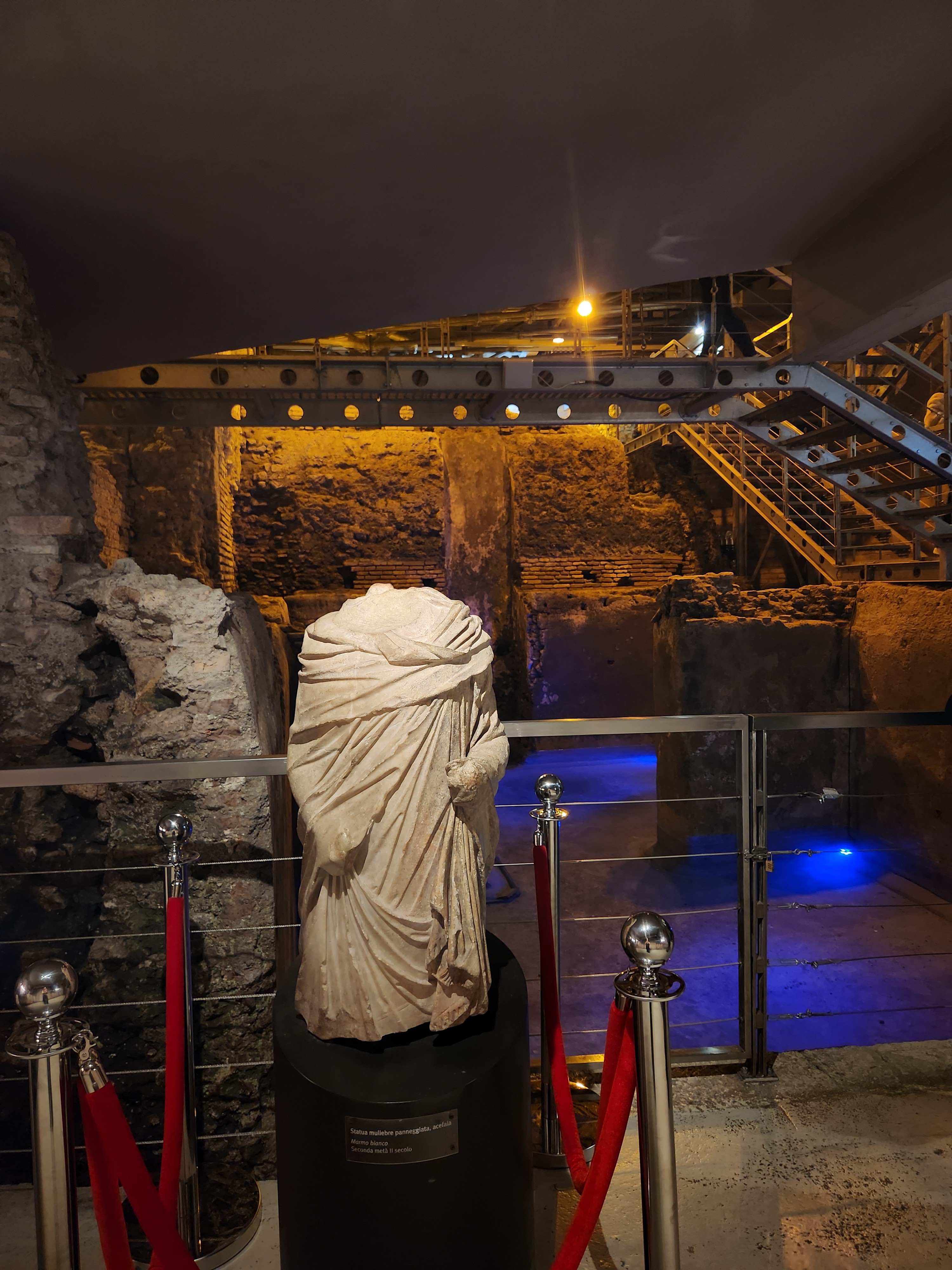
A Journey Back in Time Over Nine Meters Underground
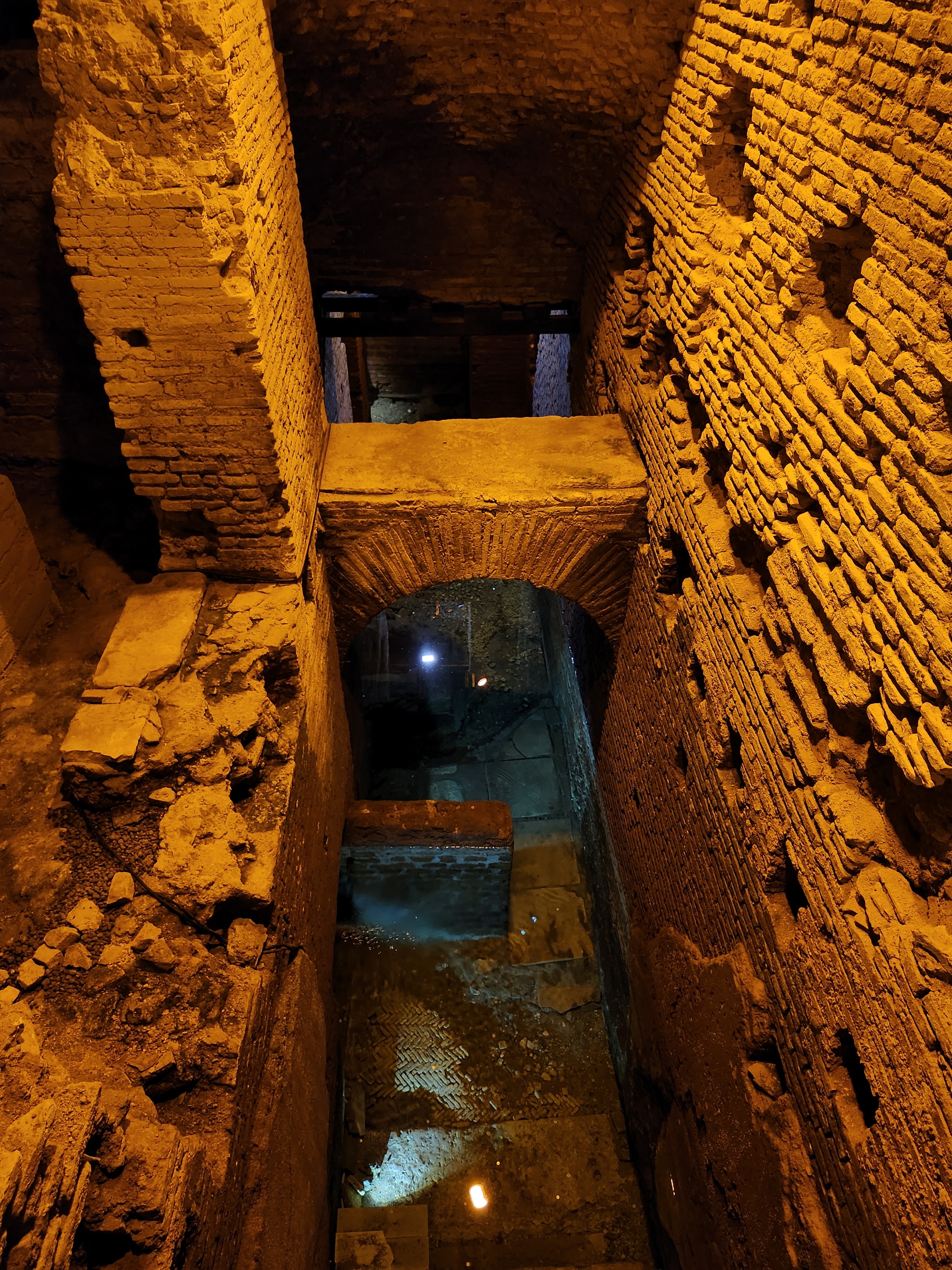
Discovered entirely by chance between 1999 and 2001 during renovation work on the old Cinema Trevi, this archaeological complex of about 350 square meters reveals the multiple layers of Rome's ancient urban stratification. As you step into this site located between Via di San Vincenzo and Vicolo del Puttarello, you embark on a journey through time spanning from the imperial era to the Middle Ages.
The excavations brought to light the structures of an ancient insula (a multi-family apartment block from Nero's time built after the great fire of 64 AD) which, in the mid-4th century, was transformed into a luxurious noble domus decorated with refined mosaics and polychrome marbles.
The Beating Heart: The Castellum Aquae of the Aqua Virgo
The true protagonist of the site—and the reason it earned the name the City of Water—is the impressive castellum aquae. This is a gigantic distribution reservoir directly connected to the Aqua Virgo aqueduct.
Inaugurated in 19 BC by Marcus Vipsanius Agrippa (son-in-law of Emperor Augustus) to supply the baths of the Campus Martius, the Aqua Virgo boasts an impressive historical record: it is the only aqueduct of ancient Rome that has remained in continuous operation to this day. Even now, the water that feeds the jets of the Trevi Fountain, the Barcaccia Fountain in the Spanish Steps, and the Fountain of the Four Rivers in Piazza Navona flows through this very same ancient system.
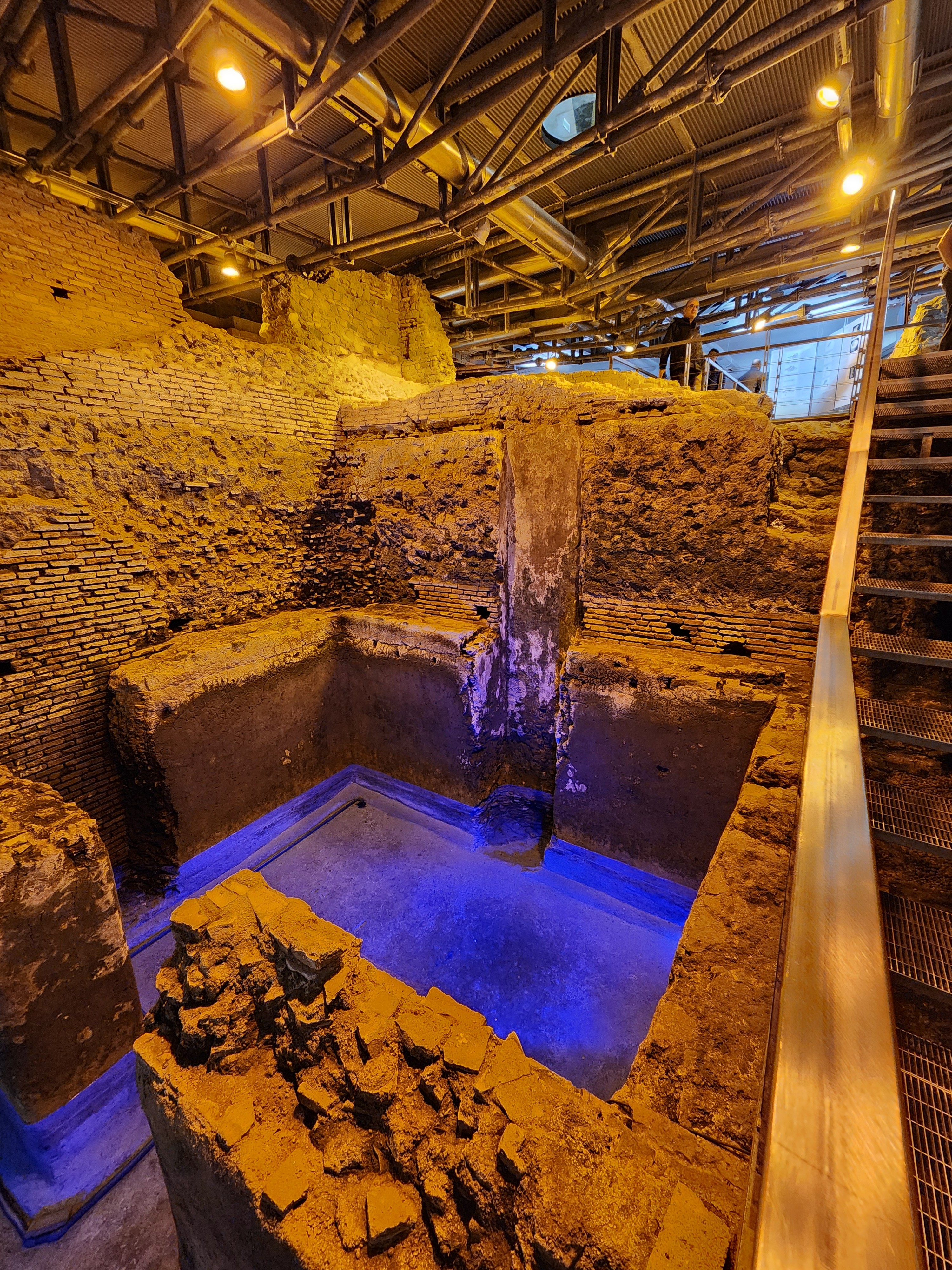
Archaeological Treasures and Imperial Secrets
Beyond its hydraulic and residential structures, the Vicus Caprarius has gifted history with countless treasures now on display along the tour. Among them stands the famous sculpted face of Alexander Helios, alongside a large quantity of coins, ceramics, and architectural elements demonstrating the vitality of this area through the centuries, enduring even dramatic historical episodes like the siege of the Goths and barbarian invasions.

Why You Should Add It to Your Rome Itinerary
Visiting the Vicus Caprarius lets you understand the true engineering behind the capital's most iconic monuments. It is an intimate experience, far from the surface crowds, connecting you directly with the underground soul of the city.
Useful Tips for Your Visit:
Location: Vicolo del Puttarello, 25 (just a few steps from the Trevi Fountain).
Opening Hours: Tuesday to Sunday, 11:00 AM to 5:00 PM (closed Mondays).
Recommendation: Since it is an underground space with limited capacity, booking tickets in advance or checking specialized guided tours is strongly recommended.
Are you planning your next getaway to the Eternal City? Staying in a strategic location lets you explore both surface icons and these hidden treasures that define Rome's magic. Discover our accommodations at DesignDStays and live an unforgettable experience!
Frequently Asked Questions (FAQs) About Vicus Caprarius
What is the Vicus Caprarius?
The Vicus Caprarius is an archaeological site located more than nine meters underground in the heart of Rome. It features the remains of an ancient Roman residential block (insula), a luxurious noble villa (domus), and the massive castellum aquae (distribution tank) of the Aqua Virgo aqueduct.
Where is the Vicus Caprarius located?
It is located at Vicolo del Puttarello, 25, just a short walk from the Trevi Fountain. Its central location makes it very easy to add to a walking tour around Rome's historic center.
Is the water in the Vicus Caprarius connected to the Trevi Fountain?
Yes! The site houses part of the Aqua Virgo aqueduct system. The water flowing through the underground structures here is the exact same water that feeds the Trevi Fountain and several other famous monumental fountains across Rome today.
How long does a visit to Vicus Caprarius take?
A standard visit typically takes around 30 to 45 minutes, making it a quick, highly rewarding cultural stop that fits easily into any busy sightseeing itinerary.
Do I need to book tickets in advance?
Because it is an underground archaeological space with limited visitor capacity to preserve the ruins, booking your tickets or arranging a guided tour in advance is strongly recommended to secure your preferred time slot. But you can buy them directly in th entrance and it costs only 4 euros.





Find Your Dream STAY Today