
How Much Does It Cost to Travel to Rome? A Real Budget Guide (2026)
Back
How Much Does It Cost to Travel to Rome? A Real Budget Guide (2026)
Ask ten people what a trip to Rome costs and you'll get ten different answers — and all ten will be right. The real question isn't "how much does Rome cost," it's "how much does the trip you actually want to take cost." This guide breaks it down honestly, by category and by travel style, for travelers planning to stay in an apartment rather than a hotel room — the choice that increasingly makes the most sense for anyone who wants real space, a kitchen, and the freedom to come and go on their own schedule.
Quick Answer
For a comfortable trip to Rome staying in a well-located apartment rather than a hotel, most travelers should plan for roughly €150–€250 per person, per day, and upwards of €350–€450+ per person, per day for a stay in a prime central location with elevated finishes and full-service extras. Accommodation is consistently the single biggest lever on total cost — and it's also the one category where an apartment stay tends to outperform a hotel of comparable quality, because the nightly rate is split across the whole group instead of paid per room.
What Actually Drives the Cost of a Rome Trip
Before looking at numbers, it helps to understand where the money actually goes. Across most travel styles, accommodation makes up the largest single share of a Rome budget, generally somewhere in the range of 40-50% of total spending, with dining as the second-largest category. This is exactly why the "per day" figures you'll see across the web vary so widely: two travelers with identical itineraries can have very different total costs depending entirely on where — and how — they sleep.
The other major variable is season. Rome in July, or during a Jubilee year, Easter week, or a major religious or cultural event, commands premium pricing across accommodation and, to a lesser extent, dining and transport. Traveling in the shoulder seasons — spring before Easter, or autumn after the summer crowds thin out — can meaningfully reduce accommodation costs without sacrificing weather or experience.
Rome Trip Cost by Category
Flights
International flight costs vary enormously based on origin city, season, and how far in advance you book, and are the one category this guide won't attempt to price — they depend entirely on where you're flying from. As a general rule, booking 2-4 months ahead and avoiding the peak weeks around Easter, Ferragosto (mid-August), and major holidays keeps fares more reasonable.
Accommodation: Apartment vs. Hotel
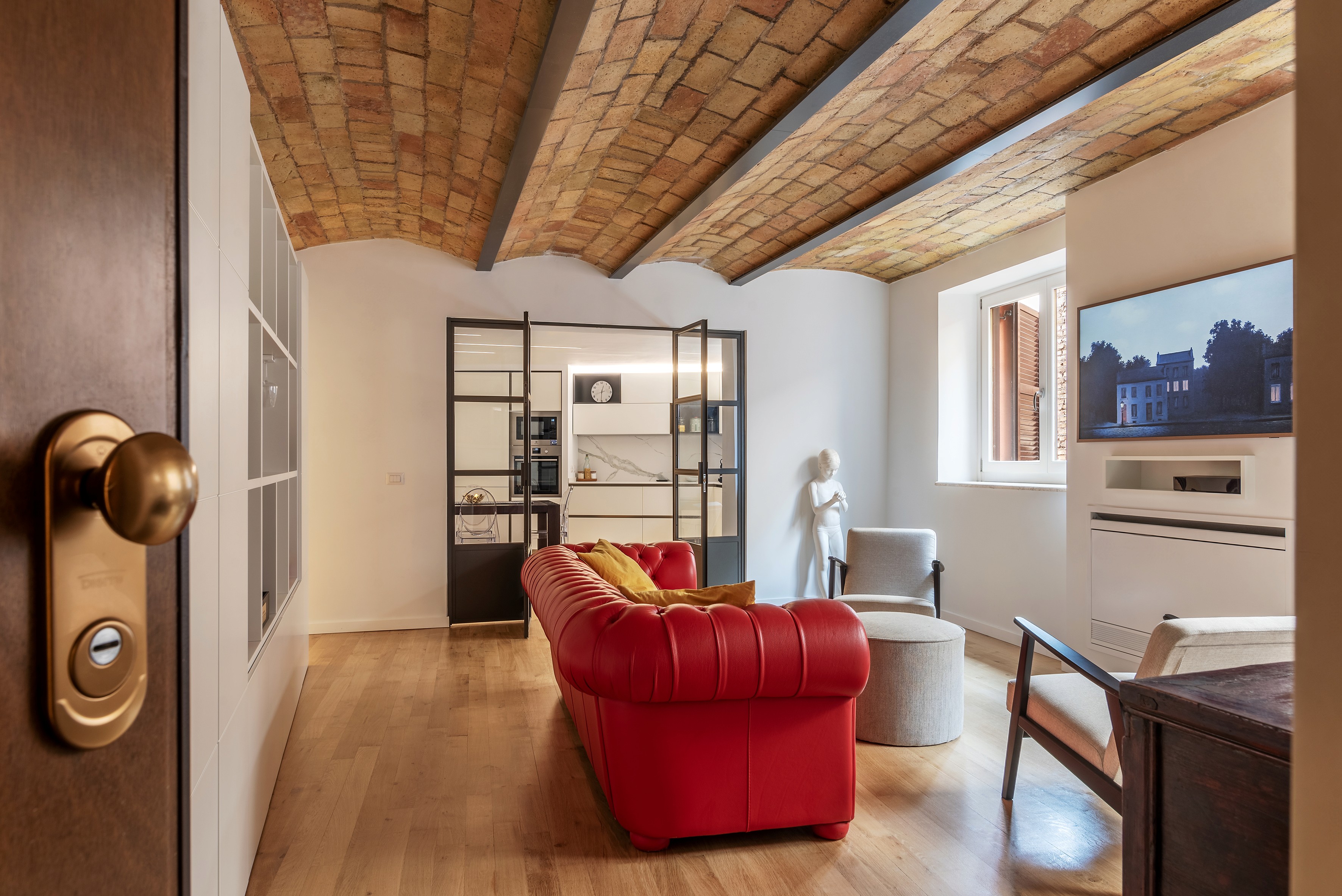
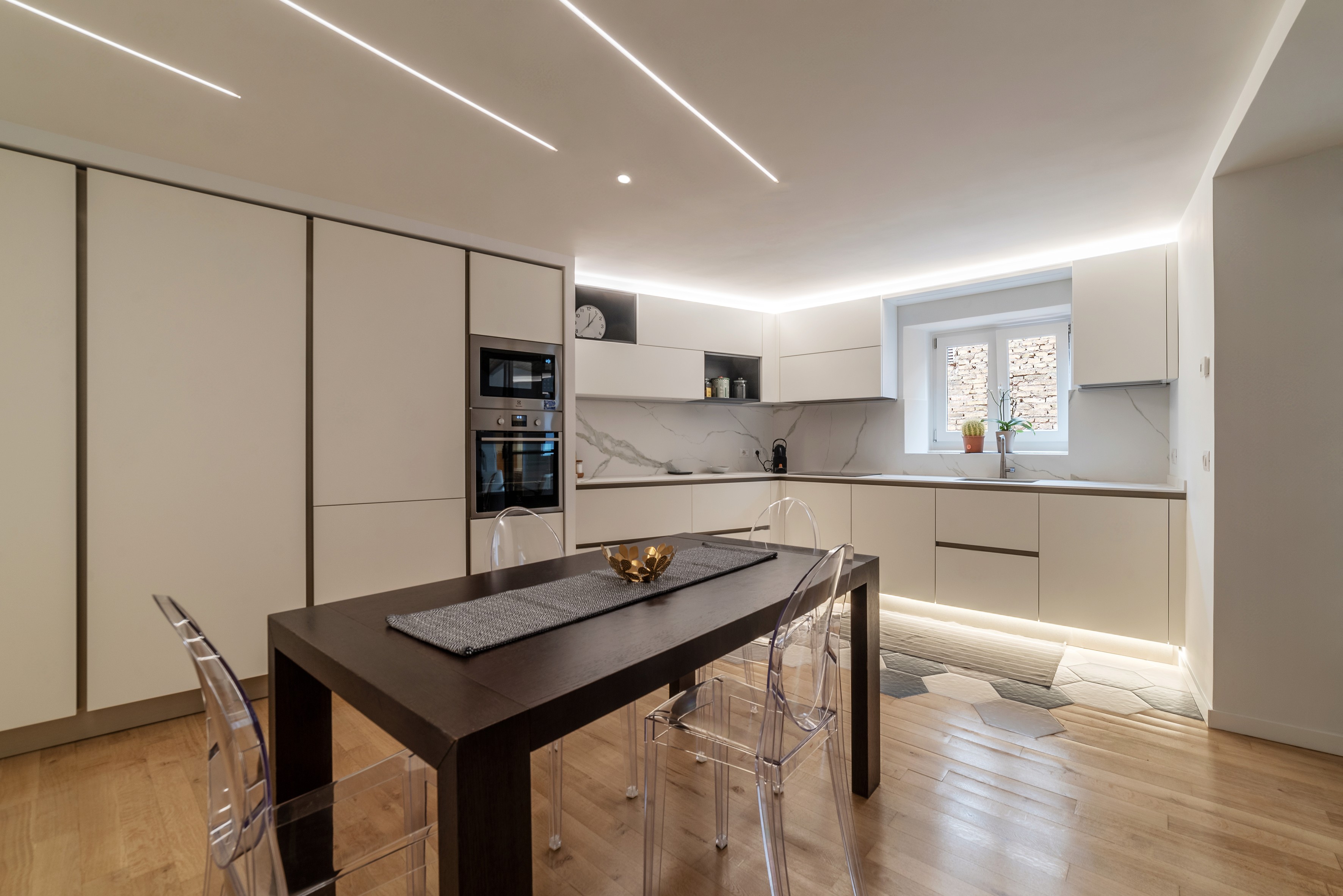
Rates for a quality, well-located apartment in Rome generally start around €150 per night and move upward from there based on location, size, and finish — a boutique apartment in a prime central neighborhood, or one with extra space, a terrace, or premium amenities, comfortably runs €250–€400+ per night. What matters is what that rate actually buys: real square meters instead of a single hotel room, a kitchen, a separate living area, self check-in that doesn't tie you to a front desk's hours, and — for two or more people — a per-person cost that a hotel room of equivalent quality and location rarely matches.
This is the calculation most travelers skip: a €220/night apartment split between two people works out to €110 per person, and split between four it's €55 per person — often less than a single hotel room of comparable location and comfort would cost one traveler alone. For groups, couples traveling with family, or anyone staying more than three or four nights, the per-person math consistently favors the apartment, and it comes with a kitchen, a living room, and the ability to actually unpack for the week rather than live out of a suitcase.
Food and Dining
Food costs in Rome swing from casual to elevated depending entirely on choices, not necessity. A quick lunch from a bakery or pizza al taglio counter costs a few euros. A relaxed sit-down dinner at a mid-range trattoria, with wine, typically runs noticeably more per person, and dining at destination restaurants or wine bars in central neighborhoods pushes costs higher still. This is where an apartment kitchen quietly pays for itself: staying somewhere with a kitchen doesn't mean cooking every meal, it means having the option to make breakfast and the occasional lighter dinner in, which can meaningfully offset the cost of splurging on the dinners that actually matter.
Local Transport
Rome's public transport system remains one of the better values in Western Europe. A multi-day transport pass is inexpensive relative to most other major European capitals, and travelers staying in central, walkable neighborhoods often find they barely need it beyond the occasional ride to the Vatican or a transfer to the airport. Taxis have fixed starting rates plus a metered fare, and are a reasonable splurge for airport transfers or late-night returns rather than a daily necessity.
Attractions and Experiences
Major sites — the Colosseum, Vatican Museums, Borghese Gallery — carry admission fees that add up quickly if visiting several per day, and skip-the-line tickets or guided access typically cost more but save meaningful time. Rome also offers an unusual amount of world-class experience for free: wandering the historic center, the Pantheon's interior, most churches, and the view from the Gianicolo hill all cost nothing. Free museum Sundays, held on the first Sunday of most months, are one of the best value opportunities in the city for travelers planning around the calendar.
Rome Daily Budget by Apartment Travel Style
Travel Style | Apartment Type | Approx. Nightly Rate | Approx. Daily Spend (per person, excl. flights) |
|---|---|---|---|
Comfortable | Well-located apartment, good size, self check-in, full kitchen | €150–€220 | €150–€230 |
Elevated | Boutique apartment in a prime central neighborhood, premium finishes | €220–€320 | €230–€350 |
Prime / Full-Service | Top-tier location, extra space or terrace, high-end amenities | €320–€450+ | €350–€450+ |
Nightly rates assume a well-appointed apartment for 2; per-person daily spend includes an estimated share of accommodation plus food, transport, and attractions. Because rate is split across the group, staying with a partner or as a family of four typically shifts a trip into the next tier of comfort at little to no added cost per person.
The Real Cost Question: Per Night, or Per Trip?
The number that matters isn't the nightly rate on a booking screen — it's the total cost of the experience you actually have. A cheaper room ten minutes further from everything often means more money spent on taxis, more meals eaten at tourist-priced restaurants near the sight you're visiting because you're too tired to walk back, and less time actually spent enjoying Rome instead of commuting through it. For travelers who value their time as much as their budget, prioritizing location, space, and comfort over the lowest nightly rate is consistently the choice that produces the better trip — and once transport, convenience, and the meals a kitchen saves you are factored in, it often isn't meaningfully more expensive at all.
Frequently Asked Questions
Is Rome an expensive city to visit? Rome sits in the middle of the pack among major Western European capitals — generally less expensive than London, Paris, or Zurich, and comparable to or slightly above cities like Madrid or Lisbon. It's entirely possible to have a comfortable trip without an extravagant budget, and the range widens considerably at the top end because location and accommodation quality vary so dramatically by neighborhood.
How much should I budget per day for a comfortable trip to Rome? Most travelers planning a comfortable trip in a well-located apartment — good space, a kitchen, a mix of casual and sit-down dining, and a couple of paid attractions — should plan for roughly €150–€250 per person per day, excluding international flights.
Is it cheaper to stay in an apartment or a hotel in Rome? For solo travelers on a very short stay, a hotel can be simpler. But for couples staying several nights, and especially for families or groups of three or more, a quality apartment consistently works out cheaper per person than equivalent hotel rooms of the same location and standard, while adding space, a kitchen, self check-in, and a more residential experience of the city.
What's the biggest hidden cost when planning a Rome trip? Choosing accommodation that's cheap on paper but far from the sights you actually want to see. The savings on the nightly rate are frequently offset by taxi fares, lost time, and higher spending on convenience meals near tourist attractions — location is one of the few costs in Rome that pays for itself.
When is the cheapest time to visit Rome? Late autumn (November) and winter before the Christmas holidays typically offer the most favorable accommodation rates and thinnest crowds, followed by early spring before Easter. Rates peak around Easter, summer (June-August), and any major cultural or religious events on the calendar.


Find Your Dream STAY Today